
The Capital Structure of Sustainability: A CSR Perspective on Industrial Decarbonization

(Reflections on the Schneider Electric Case and the Future of Responsible Investment)
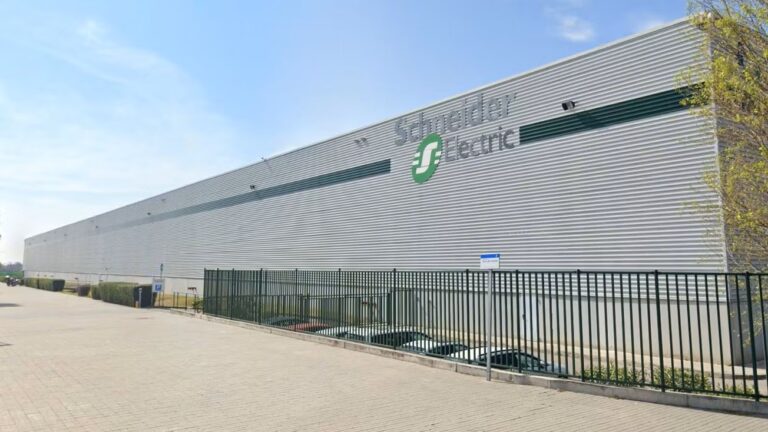
Over the past three articles, I have examined the twin transition in practice. This analysis uses Schneider Electric’s Zero CO₂ factory in Molins de Rei, Barcelona as a lens.
- Article 1 explored how the plant achieved this milestone through electrification, digitalization, and renewables.
- Article 2 analyzed the structural barriers preventing SMEs from replicating the model.
- Article 3 proposed four financing models to bridge the gap.
In this final article, I want to step back and connect the empirical case to a broader theoretical conversation: the relationship between corporate social responsibility (CSR) and capital structure.
The Financial Architecture of CSR
Much of the CSR literature focuses on the why; Why do firms adopt sustainable practices? The answers usually include reputation, regulatory compliance, and stakeholder pressure. But the Schneider case highlights a different dimension: the how. How do firms actually pay for sustainability?
Schneider’s transformation was financed through a hybrid capital structure:
| Source | Type | Purpose |
| NextGenerationEU | Grant | De-risked upfront capital costs |
| Iberdrola partnership | Microgrid-as-a-service | Avoided direct ownership of renewable infrastructure |
| Internal investment | Corporate equity | Funded electrification and digitalization |
This hybrid structure was not incidental. It was the enabling condition that made the project viable. Without the EU grant, the upfront cost might have been prohibitive. Without the Iberdrola partnership, the technical and operational complexity might have been too high. Without internal investment, the project could not have proceeded.
The Insight: CSR is not just a strategic choice. It is a financial one.
The CSR-Capital Structure Nexus
This case contributes to a growing body of literature that examines how financial structure shapes corporate sustainability outcomes. Traditionally, capital structure theory focuses on the optimal mix of debt and equity to minimize cost of capital. CSR theory focuses on the optimal mix of social and environmental initiatives to maximize stakeholder value.
The Schneider case suggests these two theories should be integrated.
When capital structure aligns with sustainability goals:
- Firms can access blended finance (public, private, and internal)
- Long-term investments become viable
- Sustainability strategies are implemented effectively
When capital structure does not align:
- Firms rely on short-term financing
- Sustainability initiatives are delayed or abandoned
- CSR remains aspirational rather than operational
For large corporates like Schneider, the alignment is possible. For SMEs, it is not. This brings us back to the two-tier transition: those with access to aligned capital structures can decarbonize; those without cannot.
The Limits of the Flagship Model
Schneider’s factory is a flagship. It demonstrates what is possible. But flagships can obscure as much as they reveal. They show the destination not the path for everyone else. They celebrate corporate leadership without questioning the structural conditions that enable it.
My research asks: If the twin transition requires EU funding, utility partnerships, and internal expertise, what happens to the thousands of SMEs that lack all three?
This is not a criticism of Schneider. It is a question about systems.
A Research Agenda for the Future
This case study is part of a broader project. Future research will explore:
- How capital structure shapes CSR outcomes: Do firms with access to blended finance achieve better sustainability results?
- Policy mechanisms to democratize green finance: How can guarantee funds, green bonds, and aggregated procurement be scaled for SMEs?
- The role of public-private partnerships: What governance structures are needed to ensure equitable access?
- Sector-specific dynamics: How do capital structure barriers differ across industries (manufacturing, retail, services)?
The goal is not just to identify barriers, but to explore solutions.
Conclusion
The Schneider Electric case demonstrates that industrial decarbonization is both feasible and profitable when the capital structure aligns. But it also reveals a gap. The resources that enabled this transformation are concentrated among large actors. SMEs remain on the periphery. Closing that gap requires rethinking how we finance the twin transition. It requires recognizing that CSR is not just about intention but it is about capital.
As a researcher at the University of Girona, I am committed to exploring these questions. If you work in sustainable finance, industrial decarbonization, or CSR strategy, I would value your perspective.
Let’s Continue the Conversation
- What financing models have you seen work for SMEs?
- How does capital structure shape sustainability outcomes in your context?
- What research gaps do you see?
Feel free to connect with me on LinkedIn or send me a message. Let’s continue the conversation.