

Beyond the Flagship: How Can SMEs Finance the Twin Transition?

(Four Financing Models for Industrial Decarbonization)
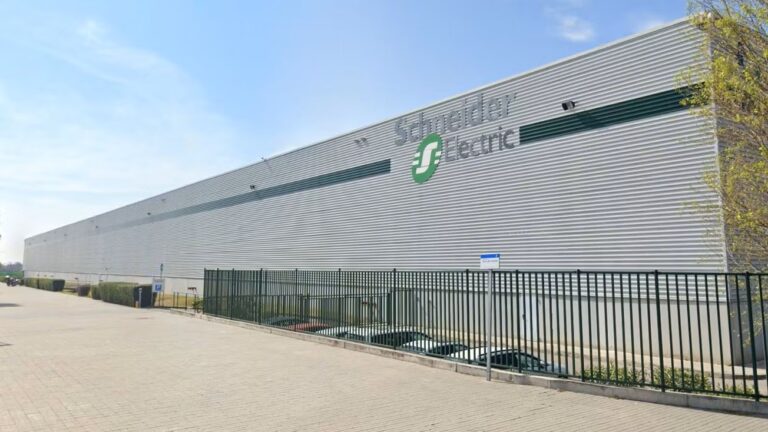
In my previous articles, I examined how Schneider Electric’s factory in Molins de Rei, Barcelona, achieved Zero CO₂ status and why most SMEs cannot replicate the model. The barriers are structural:
- No access to EU recovery funds
- No utility partnership
- No internal technical expertise
- No tolerance for long payback periods
But identifying barriers is not enough. The next question is: What would it actually take for SMEs to decarbonize? This article explores four financing models that could make the twin transition accessible to smaller firms.
Understanding the Financing Gap
Before exploring solutions, let me clarify the problem. Schneider’s project was financed through a hybrid capital structure:
| Source | Type | Accessibility for SMEs |
| NextGenerationEU | Grant | Low |
| Iberdrola partnership | Microgrid-as-a-service | Low |
| Internal corporate investment | Equity/debt | Low |
SMEs cannot easily assemble this mix. Each source has barriers:
- EU grants: Complex application, co-financing requirements, long timelines
- Utility partnerships: Utilities prioritize larger customers
- Internal investment: SMEs lack balance sheet capacity for long payback periods
The result is a financing gap: the models that work for large corporates do not work for SMEs.
Model -1: Shared Infrastructure & Utility Partnership
The Idea: Instead of each factory investing in its own renewable energy infrastructure, multiple SMEs share a collective system.
How It Works: Imagine an industrial park with 10 SMEs. Together, they:
- Install a shared solar array and battery storage
- Contract with a utility for microgrid-as-a-service
- Pay a service fee proportional to their energy use
The utility owns and operates the infrastructure. The SMEs avoid upfront capital costs.
Why It Could Work:
| Benefit | Explanation |
| Economies of scale | Shared infrastructure reduces per-firm costs |
| Risk distribution | Capital and operational risks spread across multiple actors |
| Technical simplification | Utility manages complexity; SMEs focus on production |
Barriers:
- Requires coordination and trust among firms
- Needs a utility willing to serve smaller customers
- Governance structures must be established
Example: Industrial symbiosis projects in Denmark and the Netherlands have demonstrated that shared energy infrastructure can work for clusters of SMEs.
Model – 2: Blended Finance & Public-Private Mechanism
The Idea: Public funds can de-risk private investment, making decarbonization projects viable for SMEs.
How It Works: Options include:
- Guarantee funds that reduce lender risk for SME decarbonization loans
- Green bonds issued at municipal or regional level, with proceeds directed to SME projects
- Pay-for-performance models where public funds cover part of the upfront cost, and SMEs repay based on verified savings
Why It Could Work:
| Benefit | Explanation |
| De-risking | Public funds absorb some risk, making private lenders more willing |
| Scale | Pooled funds can support multiple projects simultaneously |
| Alignment | Public goals (emissions reduction) align with private goals (cost savings) |
Barriers:
- Administrative complexity: SMEs often lack capacity to apply for and manage public funds
- Requires intermediary organizations to aggregate demand
- Political will and budget allocation
Example: The UK’s Green Deal Finance Initiative attempted to provide upfront financing for energy efficiency, repaid through energy bills. While the program was discontinued, it offers lessons for future design.
Model – 3: Aggregated Procurement Cooperatives
The Idea: Individual SMEs cannot negotiate power purchase agreements with utilities. But a cooperative of 50 SMEs could.
How It Works: SMEs form a cooperative or join an existing industry association. The cooperative:
- Aggregates energy demand from members
- Negotiates power purchase agreements (PPAs) with renewable energy providers
- Distributes costs and benefits proportionally
Why It Could Work:
| Benefit | Explanation |
| Bargaining power | Combined demand gives SMEs leverage |
| Lower prices | Aggregated procurement reduces per-unit costs |
| Simplified access | Cooperative handles negotiation and administration |
Barriers:
- Requires intermediary organizations to coordinate
- Members must agree on terms and governance
- Utilities must be willing to negotiate with cooperatives
Example: In Germany, energy cooperatives (Energiegenossenschaften) have enabled communities and SMEs to jointly invest in renewable energy projects.
Model – 4: Technical Assistance and Capacity Building
The Idea: SMEs lack internal expertise. Shared technical assistance can fill the gap.
How It Works: Regional development agencies, universities, or industry associations provide:
- A pool of energy auditors available at subsidized rates
- Digital tools licensed collectively and shared across firms
- Training programs for existing staff on energy management
Why It Could Work:
| Benefit | Explanation |
| Access to expertise | SMEs gain skills they cannot develop internally |
| Cost sharing | Expenses spread across multiple firms |
| Knowledge transfer | Training builds long-term capacity |
Barriers:
- Funding must come from somewhere – public budgets, industry levies, or EU structural funds.
- Requires coordination among multiple stakeholders
- May take time to build trust and participation
Example: The Barcelona Circular hub provides training and technical assistance to industrial SMEs on Industry 4.0 and circular economy models.
The Common Thread: Collective Action
None of these models are easy. Each requires coordination, trust, and investment. But they point in a clear direction: the twin transition for SMEs requires collective action, not individual effort.
Schneider could go it alone. Most SMEs cannot. Policy must recognize this difference.
What Comes Next
This article is the third in a series on the twin transition in practice. In the final article, I will connect this case study to broader questions of corporate social responsibility and capital structure and outline a research agenda for the future.
Let’s Continue the Conversation
I am a researcher at the University of Girona, studying corporate social responsibility and its impact on capital structure. This case study is part of a broader project on the twin transition and its implications for firms of different sizes.
If you work in industrial decarbonization, SME sustainability, or energy policy, I would value your perspective.
- Have you seen these financing models work in practice?
- What barriers remain?
- Are there examples from your region or sector?
Feel free to connect with me on LinkedIn or send me a message. Let’s continue the conversation.


2 Comments