
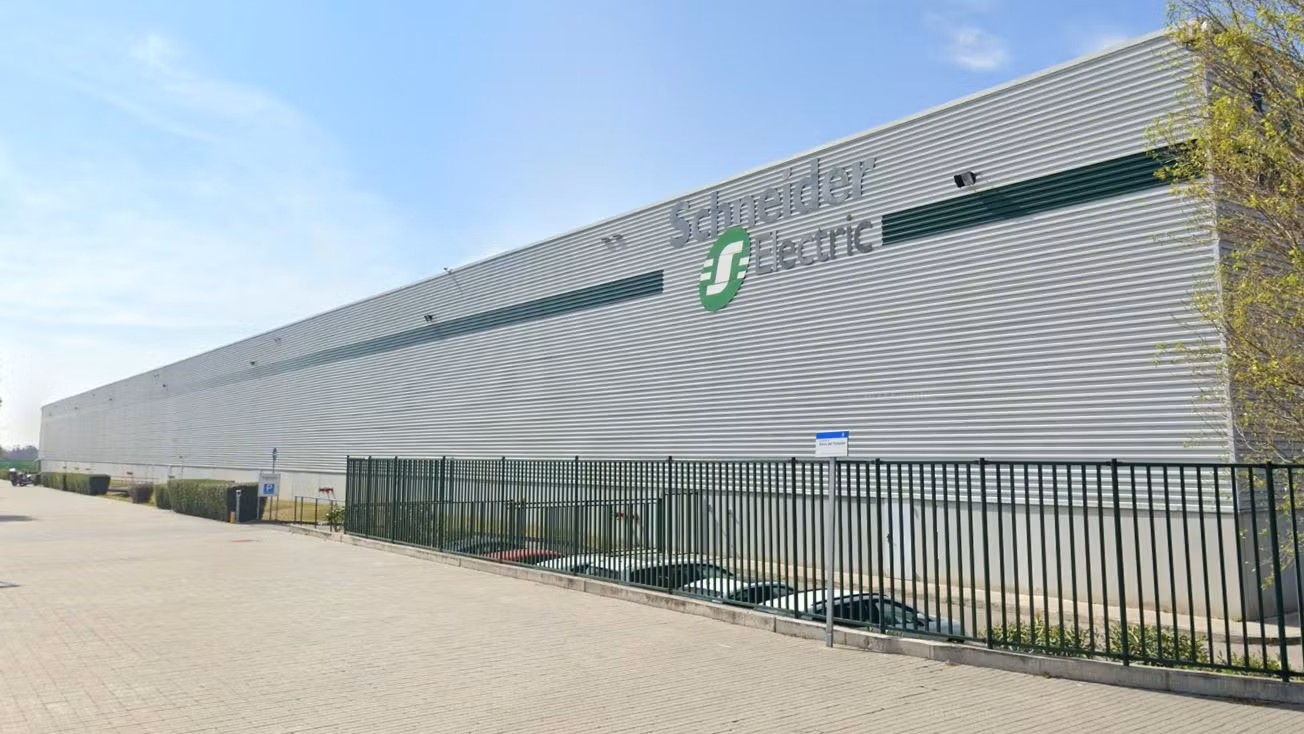
The Factory That Went Green: What Schneider Electric’s Barcelona Plant Teaches Us About the Future of Industry

(A story of zero emissions, smart technology, and the question nobody is asking)
Introduction: A Factory Like Any Other?
Imagine a factory. It is 50 years old. It employs over 160 people. It produces 300,000 electrical enclosures every year—the kind of metal boxes that house electrical components in buildings, factories, and infrastructure.
Now imagine that this factory produces zero emissions. Not reduced emissions. Not offset emissions. Zero.
That is what happened at Schneider Electric’s plant in Molins de Rei, a small town just outside Barcelona. In 2025, the facility achieved “Zero CO₂ Factory” status, eliminating all Scope 1 and 2 emissions, the direct emissions from its own operations. This is not a pilot project. It is not a start-up experiment. It is a legacy industrial facility that transformed itself.
The question is: How did they do it? And can others follow?
What is the “Twin Transition”?
Before we dive into the Schneider case, let me explain a term you will see throughout this article: the twin transition.
The twin transition refers to the combination of two major changes happening in industry and society:
- Digitalization – Using digital technologies (sensors, data analytics, AI) to improve how things work
- Sustainability – Reducing environmental impact, especially carbon emissions
The idea is that these two transitions are not separate. They reinforce each other. For example:
- Digital sensors can track exactly how much energy a machine uses
- That data can identify where energy is wasted
- Fixing that waste reduces both costs and emissions
Digitalization enables sustainability. Sustainability drives digital innovation. This is the twin transition.
The Schneider Electric Case: A Story of Transformation
The Challenge:
The Schneider Electric plant in Molins de Rei produces polyester electrical enclosures. The production process requires pressing machines that operate at temperatures exceeding 150°C. Before the transformation, this heat came from natural gas. The factory burned gas to heat its molds, and it burned gas to heat and cool its buildings. Natural gas is a fossil fuel. Burning it releases carbon dioxide (CO₂)—the primary greenhouse gas driving climate change. For decades, this was normal. It was how factories operated. But pressure was building:
- The European Union set ambitious climate targets
- Energy costs were rising and volatile
- Schneider Electric committed to becoming carbon neutral across its operations
The factory needed to change.
The Solution: Three Pillars:
Schneider’s transformation rested on three integrated pillars. Let me explain each in plain language.
Pillar 1:
Electrification – Replacing Gas with Electricity: The most fundamental change was replacing gas with electricity. The factory installed a 1.2 megawatt electric boiler, one of the most powerful in Spain—to heat the molds used in production. Think of it as a giant electric kettle, but instead of boiling water for tea, it generates the heat needed to shape polyester enclosures. They also installed:
- Heat pumps to heat and cool buildings more efficiently
- Electric infrared systems for targeted heating
Why this matter: Electricity can be generated from renewable sources (solar, wind) but Gas cannot. By switching from gas to electricity, the factory could eventually run on 100% clean energy.
The result: Industrial process efficiency improved by 8%. Climate control efficiency improved by 60%.
Pillar 2:
Digitalization – Making Energy Visible: You cannot manage what you cannot measure. Before digitalization, the factory knew its total energy bill, but not where that energy was going. Which machines used the most power? When was consumption highest? Where was waste happening? To answer these questions, Schneider installed:
- Power Monitoring Expert – Software that tracks energy use in real time
- PowerTAG sensors – Small devices installed on each of the 18 presses to monitor their individual consumption
- AVEVA Insight – A platform that centralizes all data, production, machinery, energy, in one place
Why this matter: With real-time data, the factory could identify anomalies, detect inefficiencies, and optimize operations. Energy became a variable to manage, not a fixed cost to accept.
The result: Data became an operational lever. The factory could act on consumption and performance deviations immediately.
Pillar 3:
Renewables and Microgrid – Generating Clean Energy On-Site: The third pillar was generating renewable energy on-site. In partnership with Iberdrola, a major Spanish utility, Schneider installed a microgrid, a small, self-contained energy system that can operate independently or alongside the main grid. The microgrid includes:
- 990 solar panels generating 670 MWh per year (enough to power approximately 200 homes)
- 216 kWh battery storage to store excess energy for use at night or during peak demand
- 5 electric vehicle charging points for company vehicles
- A 20-year Power Purchase Agreement (PPA) with Iberdrola for 100% renewable energy
Why this matter: The factory now generates its own clean energy and purchases the rest from renewable sources. It is no longer dependent on fossil fuels.
The result: The plant achieved zero Scope 1 and 2 emissions.
The Role of Public Funding
This transformation was not cheap. It required significant investment in new equipment, infrastructure, and technology. To make it viable, Schneider accessed NextGenerationEU funding through IDAE (the Institute for Energy Diversification and Saving), a Spanish government agency. NextGenerationEU is a European Union recovery fund designed to support the green and digital transitions. It provides grants and subsidies to projects that align with EU climate goals.
Why this matter: Without public funding, the business case for this transformation might not have worked. The grant reduced the upfront cost and improved the return on investment.
The Results: Impressive Numbers:
Let me share the outcomes in concrete terms:
| Scope 1 and 2 emissions | Zero (100% reduction) |
| Energy efficiency | +27% since 2019 |
| CO₂ avoided annually | 2,250 tonnes since 2017 |
| Projected savings | €7 million+ through 2050 |
| Payback period | 5 years |
To put this in perspective:
- 2,250 tonnes of CO₂ is equivalent to taking approximately 500 cars off the road for a year
- The factory now attracts weekly visits from companies wanting to learn from its example
- It has received sustainability awards and recognition across Spain
The Critical Question: Can Others Do This?
The Schneider case is genuinely impressive. It proves that industrial decarbonization is technically feasible and economically profitable. But here is the question that concerns me as a researcher:
Can smaller factories replicate this model? Consider what Schneider had access to:
| Resource | Schneider’s Access |
| EU recovery funding | Yes – NextGenerationEU grant |
| Utility partnership | Yes – Iberdrola microgrid-as-a-service |
| Internal technical expertise | Yes – Schneider’s own software and engineers |
| Corporate resources | Yes – Multinational with long-term investment horizon |
Now consider a typical small or medium-sized enterprise (SME) in Catalonia:
| Resource | SME Access |
| EU recovery funding | Unlikely – Complex application, limited capacity |
| Utility partnership | Unlikely – Utilities prefer larger customers |
| Internal technical expertise | Unlikely – No in-house sustainability engineers |
| Corporate resources | Unlikely – Tight cash flow, short payback requirements |
Most SMEs have none of these advantages. This is not a criticism of Schneider. They did what any smart company would do: they used the resources available to them. But it raises a structural question: If decarbonization requires EU funding, utility partnerships, and internal expertise, what happens to the thousands of firms that lack all three?
The Risk of a Two-Tier Transition
The twin transition, digitalization plus sustainability – risks becoming a two-tier system:
- Tier 1: Large corporates with access to funding, partnerships, and expertise. They decarbonize and capture the benefits.
- Tier 2: SMEs without these resources. They remain on the periphery, unable to invest, unable to transition.
This is not just unfair. It is inefficient. SMEs make up the majority of businesses in Europe. If they cannot transition, the EU’s climate goals will not be met.
What Would It Take to Close the Gap?
Based on my preliminary research, closing the gap requires action in four areas:
1. Accessible Financing
SMEs need financing models designed for their scale and risk profile. This could include:
- Guarantee funds that reduce lender risk
- Green bonds issued at municipal or regional level
- Pay-for-performance models where public funds cover upfront costs, and SMEs repay based on verified savings
2. Shared Infrastructure and Utility Partnerships
Individual SMEs cannot negotiate power purchase agreements with utilities. But a cooperative of 50 SMEs could. Aggregated procurement allows smaller actors to combine their energy demand and negotiate as a bloc.
3. Technical Assistance and Capacity Building
SMEs need access to expertise. This could include:
- Shared energy auditors available at subsidized rates
- Digital tools licensed collectively and shared across firms
- Training programs for existing staff on energy management
4. Sector-Specific Roadmaps
One-size-fits-all solutions do not work. A bakery, a metal fabricator, and a textile producer have different energy needs. SMEs need practical, sector-specific guidance that they can actually implement.
What This Case Teaches Us
The Schneider Electric plant proves that industrial decarbonization is both feasible and profitable. It is a genuine achievement and a valuable benchmark.
But it also reveals a gap.
The resources that enabled this transformation – EU funding, utility partnership, internal expertise, are concentrated among large actors. SMEs remain on the periphery. Closing that gap is the next challenge.
Let’s Continue the Conversation
I am a researcher at the University of Girona, studying corporate social responsibility and its impact on capital structure. This case study is part of a broader project on the twin transition and its implications for firms of different sizes. If you work in industrial decarbonization, SME sustainability, or energy policy, I would value your perspective.
- What financing models have you seen work for smaller factories?
- What barriers remain?
- Are there examples from your region or sector?
Feel free to connect with me on LinkedIn or send me a message. Let’s continue the conversation.
