The Barriers SMEs Face in Financing Industrial Decarbonization

(Why the Schneider Electric Model Cannot Be Easily Replicated)
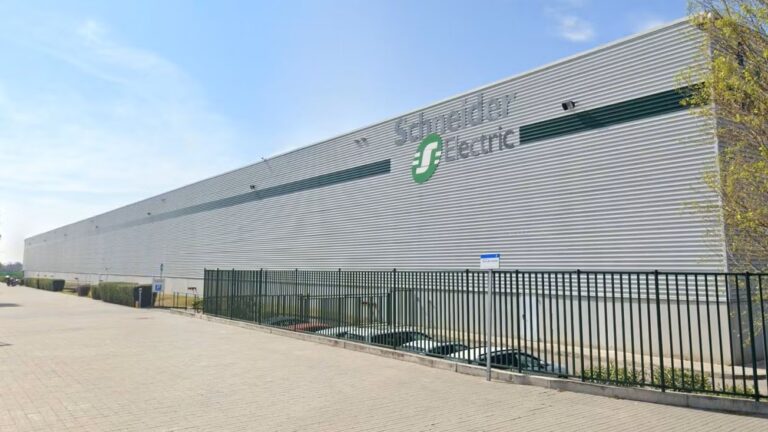
In my previous article, I examined how Schneider Electric’s factory in Molins de Rei, Barcelona, achieved Zero CO₂ status through a combination of electrification, digitalization, and renewable energy.
The achievement is impressive. It proves that industrial decarbonization is technically feasible and economically profitable. But it also raises a critical question: Can smaller factories replicate this model?
This article explores the four structural barriers that prevent most SMEs from following Schneider’s path. It draws on preliminary research and is part of a broader project on corporate social responsibility and capital structure.
Understanding the Twin Transition
Before diving into the barriers, let me explain the concept that frames this entire discussion. The twin transition refers to the parallel pursuit of two major changes in industry:
| Transition | What It Means | Example |
| Digitalization | Using digital technologies to improve efficiency and productivity | Sensors that track energy use in real time |
| Sustainability | Reducing environmental impact, especially carbon emissions | Replacing gas boilers with electric alternatives |
The term ‘twin’ is used because these transitions are not separate. They reinforce each other.
How they connect:
- Digital sensors collect data on energy consumption
- Data analytics identifies where energy is wasted
- Fixing that waste reduces both costs and emissions
- Reduced costs fund further sustainability investments
This is the promise of the twin transition: efficiency and sustainability working together.
Why it matters for SMEs:
The twin transition is not just an environmental imperative. It is an economic one. Factories that fail to transition risk:
- Higher energy costs
- Regulatory penalties
- Loss of competitiveness
- Exclusion from supply chains that demand sustainability credentials
But as this article will show, the transition is not equally accessible to all firms.
Four Barriers
Barrier-1 Financing Structure
Schneider’s project was funded through a hybrid capital structure as presented in following table; Most SMEs cannot access this hybrid capital structure.
| Source | Type | Accessibility for SMEs |
| NextGenerationEU | Grant | Low – complex application, limited capacity |
| Iberdrola partnership | Microgrid-as-a-service | Low – utilities prefer larger customers |
| Internal corporate investment | Equity/debt | Low – tight cash flow, short payback requirements |
Why this matter? – SMEs cannot easily assemble this mix of public, private, and internal financing. Each source has barriers:
- EU grants: Require administrative capacity, co-financing, and long application timelines
- Utility partnerships: Utilities prioritize larger customers with predictable demand
- Internal investment: SMEs often lack the balance sheet to absorb long payback periods
Reflective insight: The Schneider case demonstrates that decarbonization is profitable but only when the capital structure aligns. For SMEs, the capital structure is the binding constraint.
Barrier – 2 Utility Negotiation Capacity
Increasing power capacity for the 1.2 MW electric boiler required complex negotiations with the utility. This included:
- New transformer center
- Medium-voltage cells
- Complete low-voltage network reconfiguration
Why this matter? – Smaller factories often lack;
- The technical team to manage these negotiations
- The leverage to secure favourable terms
- The internal capacity to coordinate with multiple stakeholders
Reflective insight: Decarbonization is not just a technical challenge, it is a negotiation challenge. SMEs are disadvantaged in these negotiations.
Barrier – 3 Internal Technical Expertise
Schneider used its own software (AVEVA, EcoStruxure) and engineers. This internal capacity;
- Reduce the dependence on external consultants
- Accelerated implementation
- Enabled continuous optimization
Why this matter? – SMEs typically do not have;
- In-house sustainability engineers
- Access to advanced digital tools
- The capacity to train existing staff on new systems
Reflective insight: The twin transition requires new skills. As recent UOC research notes, there is a ‘rising demand for hybrid professionals, where soft skills are the essential enablers of technical expertise.’ SMEs cannot easily develop or hire these skills.
Barrier 4 Payback Period Tolerance
A 5-year payback period is acceptable for a multinational corporation. For an SME with tighter cash flow, even a 3-year payback can be difficult to justify.
Why this matter? – SMEs often:
- Operate on shorter financial cycles
- Face pressure from lenders and investors for quick returns
- Lack the ability to absorb long-term investments without immediate returns
Reflective insight: The business case for decarbonization depends on the time horizon. Large corporates can afford to wait. SMEs often cannot.
The Risk – a Two-Tier Transition
The four barriers described above are not isolated. They reinforce each other.
How the barriers compound:
| Barrier | Leads to… |
| Financing structure | Inability to access EU grants or utility partnerships |
| Utility negotiation capacity | Dependence on expensive, carbon-intensive energy |
| Internal expertise | Reliance on external consultants (higher costs) |
| Payback period tolerance | Preference for short-term cost savings over long-term investment |
Together, these barriers create a two-tier system:
Tier 1: Large corporates;
- Access to EU funding, utility partnerships, and expertise.
- Can absorb long payback periods
- Decarbonize and capture benefits (cost saving, reputation and regulatory compliance).
Tier 2: SMEs
- No access to EU funding, utility partnerships, or internal expertise
- Cannot absorb long payback periods
- Remain on the periphery, unable to invest, unable to transition
Why this matter for Europe?
SMEs make up 99% of all businesses in the EU and employ approximately 100 million people. If they cannot transition, the EU’s climate goals will not be met. The twin transition cannot be a project for large corporates alone. It must be inclusive.
Thus, the twin transition – digitalization plus sustainability – is technically feasible for SMEs. But the financing and partnership structures that enabled Schneider’s success are not easily transferable. Without targeted policy intervention, we risk a two-tier transition: flagship projects for large corporates, and stagnation for everyone else.
What Comes Next
This article is the second in a series on the twin transition in practice. In the next article, I will explore financing models that could work for SMEs, including shared infrastructure, blended finance, and aggregated procurement cooperatives. The goal is not just to identify barriers, but to explore solutions too.
Let’s Continue the Conversation
I am a researcher at the University of Girona, studying corporate social responsibility and its impact on capital structure. This case study is part of a broader project on the twin transition and its implications for firms of different sizes.
If you work in industrial decarbonization, SME sustainability, or energy policy, I would value your perspective.
- What financing models have you seen work for smaller factories?
- What barriers remain?
- Are there examples from your region or sector?
Feel free to connect with me on LinkedIn or send me a message. Let’s continue the conversation.